A service engineer drives 45 minutes to a customer site. The problem? A loose cable connection that takes 90 seconds to fix. Total cost to your business: £220 including vehicle, fuel, time, and overhead.
That scenario played out 127 times last quarter at one UK utilities company we spoke with. They've now cut it by 63% using remote visual assistance. The maths is simple: £27,940 saved in three months by having an expert guide an on-site person through fixes via video call with augmented reality overlays.
This isn't theory anymore. Remote visual assistance has moved from "interesting tech" to "financially necessary" in 2026.
What We Mean By Remote Visual Assistance
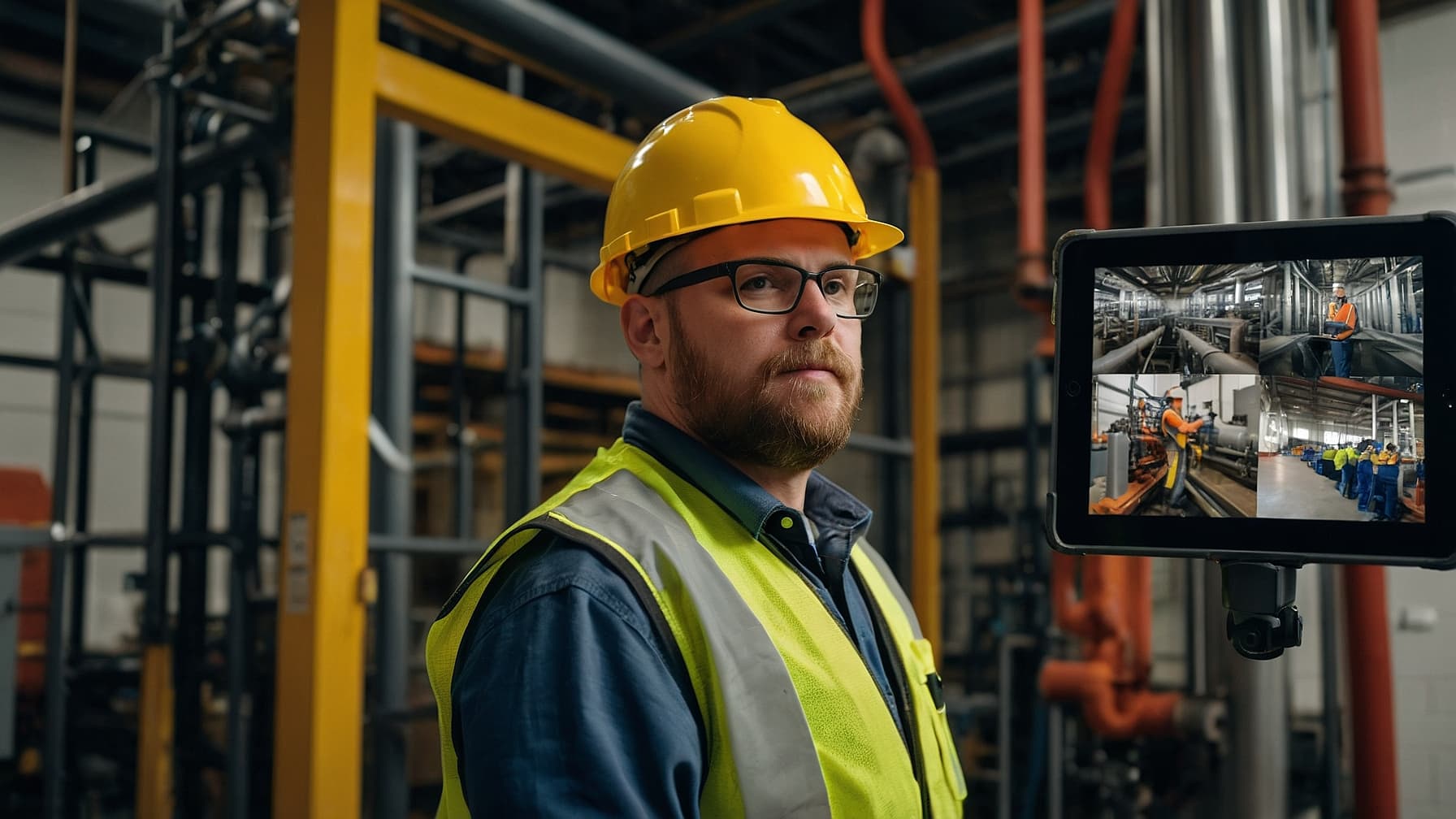
Strip away the marketing speak: remote visual assistance means a camera-equipped person (customer, technician, or contractor) connects via smartphone to a remote expert who can see what they see and guide them through diagnosis or repair.
The expert can:
- Control the camera zoom and flashlight remotely
- Draw annotations on the live video feed
- Capture timestamped photos
- Record the entire session for compliance
- Extract serial numbers and model codes automatically via OCR
This isn't a Zoom call. Purpose-built platforms like OnSight RVX (which Hostcomm provides) were designed specifically for physical environments — industrial equipment, damaged property, installation sites — not computer screens.
The difference matters. General video calling lacks the tools that make remote support actually work: AR markup, remote camera control, automatic documentation, CRM integration, and audit trails.
The Cost of Sending Someone
Before we talk about savings, let's be honest about what field visits actually cost in 2026.
Direct costs per UK field service visit:
- Engineer salary (2 hours billable + 1.5 travel): £75-120
- Vehicle (fuel, insurance, depreciation): £35-60
- Overhead allocation: £40-70
- Total: £150-250 per standard visit
But that's just the starting point. Add:
- Failed first-time fixes requiring return visits (38% industry average according to TSIA)
- Scheduling delays costing customer downtime
- Expert bottlenecks when only 2-3 people can handle complex issues
- Lost knowledge when senior technicians retire
A telecommunications provider we work with calculated their true cost per truck roll at £287 when they included rework, scheduling overhead, and lost revenue from delayed resolutions.
Most organisations have never done this calculation properly. They track direct labour and fuel, but miss the compounding costs of inefficiency.
What Remote Visual Assistance Actually Saves
The headline number from our 2025-2026 deployments: organisations reduce on-site visits by 40-52% using remote visual assistance for triage and guided resolution.
That's not a theoretical maximum. That's the middle of the range from actual Hostcomm customers.
Utilities Company: 48% Truck Roll Reduction
A regional water utility deployed remote visual assistance in November 2025. Their problem: emergency callouts for "pump failures" that were often sensor issues or tripped breakers, not actual pump failures.
Before RVA:
- 420 emergency callouts per quarter
- Average cost per callout: £245
- Quarterly cost: £102,900
After RVA (Q1 2026):
- 218 on-site visits (48% reduction)
- 202 resolved remotely (avg 18 minutes per session)
- Quarterly cost: £58,410 (on-site) + £8,080 (remote platform costs) = £66,490
- Savings: £36,410 per quarter (£145,640 annualised)
The honest bit: it took them 6 weeks to get adoption right. Initial resistance from field engineers who saw it as "watching us work" disappeared once they realised remote guidance reduced their travel time.
Manufacturing QA: £180K Annual Saving
A food production company uses remote visual assistance for customer site equipment inspections. Previously, a quality engineer travelled to customer sites for compliance checks.
Before RVA:
- 86 site visits per year
- Average cost per visit: £310 (including travel time and overnight stays)
- Annual cost: £26,660
After RVA:
- 28 site visits (67% reduction — only when physical intervention required)
- 58 remote inspections
- Annual cost: £8,680 (on-site) + £5,040 (platform) = £13,720
- Savings: £12,940 per year
They also cut inspection turnaround from 3-5 days (scheduling + travel) to same-day for remote sessions. That time reduction is worth more than the direct cost savings.
Insurance Claims: 52% Assessment Cost Reduction
A commercial insurer deployed remote visual assistance for property damage assessments in January 2026.
Before RVA:
- Average assessor visit cost: £165
- 1,840 assessments per quarter
- Quarterly cost: £303,600
After RVA (Q1 2026):
- 890 on-site visits (52% reduction)
- 950 remote assessments
- Quarterly cost: £146,850 (on-site) + £9,500 (platform) = £156,350
- Savings: £147,250 per quarter (£589,000 annualised)
The bonus: claims settlement time dropped from 12 days to 6 days average, improving customer satisfaction scores by 23 points.
Where Remote Visual Assistance Doesn't Work
Let's be clear about limitations. Remote visual assistance is brilliant for:
- Visual diagnosis and troubleshooting
- Guiding non-technical people through fixes
- Damage assessment and documentation
- Equipment inspections and compliance checks
- Expert consultation on complex issues
It's useless for:
- Repairs requiring specialist tools
- Physical part replacement
- Safety-critical work requiring on-site presence
- Environments without mobile signal
- Situations where the on-site person genuinely can't perform the task
The 40-52% reduction figure reflects this reality. Half your field work still needs hands-on presence. But the other half doesn't, and you're currently sending people anyway because that's how the workflow was built.
Implementation: What Actually Works
We've deployed OnSight RVX at 23 UK organisations since mid-2025. The successful rollouts share four patterns:
1. Start with high-volume, low-complexity issues
Don't begin with your most complex technical problems. Start with the repetitive, simple stuff that currently wastes field engineers' time. Loose connections, reset procedures, sensor checks, visual inspections.
Get 20-30 successful remote resolutions under your belt before tackling harder scenarios.
2. Integration with your field service management system is non-negotiable
If remote sessions aren't automatically logged to work orders in your FSM, adoption collapses. Your engineers will revert to "just go on-site" because manual documentation is annoying.
OnSight RVX integrates with Salesforce, ServiceNow, and most major FSM platforms. Session data, photos, and recordings sync automatically.
3. Make it frictionless for the on-site person
The best remote visual assistance platforms don't require app downloads. The on-site person (customer, contractor, junior technician) gets an SMS link, taps it, and they're connected via browser.
App download requirements kill adoption. Someone standing in a plant room with a broken pump isn't going to create an account and download an app.
4. Track the right metrics
Don't just count remote sessions. Track:
- First-time fix rate (should improve as experts guide fixes remotely)
- Average resolution time
- Customer satisfaction scores
- Actual cost per incident (on-site vs remote)
- Percentage of issues resolved remotely vs requiring on-site
One of our customers tracks "expert utilisation efficiency" — how many issues one senior engineer can resolve remotely vs being stuck in a van. It's gone from 1.2 resolutions per day (on-site) to 5.8 (remote).
The Compliance Bonus
Several industries are discovering remote visual assistance solves documentation problems they didn't realise they could fix.
Recorded sessions with timestamped photos and GPS coordinates create audit trails that handwritten service reports never could. For regulated sectors — utilities, healthcare equipment, food production — this is worth real money.
One medical device service company uses session recordings for:
- Compliance evidence for ISO 13485 audits
- Training material for new technicians
- Dispute resolution when customers query work done
They calculate this saves £15,000 per year in admin time and reduces compliance preparation effort by 40%.
Platform Costs: What You'll Actually Pay
OnSight RVX pricing for UK organisations:
- Small teams (5-10 licences): £420-840/year per licence
- Mid-market (20-50 licences): £300-420/year per licence
- Enterprise (100+ licences): £200-300/year per licence
That includes:
- Browser-based access (no app required for field contacts)
- AR annotation tools and remote camera control
- Automatic session recording and photo capture
- FSM/CRM integration (Salesforce, ServiceNow, Zendesk)
- SOC-2 and ISO 27001 compliance
- UK/EU data residency options
The honest comparison: you're looking at £25-70 per month per user. If that user saves you one truck roll per month at £150-300 per roll, the ROI is immediate.
What About AI?
Several platforms now offer AI features: automatic transcription, issue classification, knowledge base population from session recordings.
Our take: these are nice-to-have, not essential. The core ROI comes from reducing truck rolls and improving first-time fix rates. AI can optimise workflows once you've got the basics working.
That said, one genuinely useful AI feature is optical character recognition (OCR) for serial numbers and model codes. Instead of verbally spelling out "SN: 4X7B-99TK-LLMM-3J8P" over video, the system reads it from the camera feed automatically. This saves 2-3 minutes per session and eliminates transcription errors.
The Bottom Line
For UK organisations with field service teams, remote visual assistance is one of the few technologies where the ROI is obvious and fast.
Break-even calculation:
- Platform cost: £400/user/year
- One avoided truck roll per month: £150-300 saved
- Break-even: 2-3 months
After that, it's pure savings.
The organisations doing this well in 2026 aren't treating remote visual assistance as a "nice innovation." They've reengineered their field service workflow around it:
- Remote triage first
- On-site dispatch only when physical intervention is required
- Expert engineers freed from travel to handle more complex work
If you're still sending engineers to every single callout because "that's how we've always done it," you're burning £40,000-200,000 per year (depending on team size) that you don't need to.
The technology works. The question is whether your organisation will adopt it this year or wait until your competitors already have the cost advantage.
Next Steps
Hostcomm provides OnSight RVX remote visual assistance for UK contact centres, field service teams, and technical support operations. We'll set you up with a pilot deployment to prove the ROI before committing to rollout.
Contact us to discuss your field service costs and whether remote visual assistance makes financial sense for your organisation.